Part 1: Wheelchair Accessible Vehicle (WAV) Funding—The Bridge to Mobility Award Process
Article Highlights Bridge to Mobility fills the gap between isolation and a life of fulfillment by providing critical “last-dollar” funding for wheelchair-accessible vehicles (WAVs). Through a unique collaborative model with mission-aligned partners and industry dealers, we empower individuals with disabilities to regain access to education, employment, and essential medical care.
How Bridge to Mobility Awards Transform Lives
Transportation challenges remain one of the largest barriers to independence for individuals with mobility disabilities. Research shows that approximately 96% of wheelchair users do not have access to a WAV. Gerhard Schmidt, Executive Director of Bridge to Mobility (BTM), is on a mission to change those statistics. In Gerhard’s words, “There are opportunities and possibilities; getting to medical appointments to get the treatments they need to get better, or educational opportunities. A lot of people want to work, but they’re homebound because they don’t have access to a wheelchair-accessible vehicle to get to work and engage with their communities and families. That’s why we do what we do.” Without accessible transportation, individuals often face:
- Missed or delayed medical care and therapy appointments
- Limited access to educational opportunities and job training
- Reduced employment options and financial instability
- Social isolation and reduced community engagement
Bridge to Mobility’s WAV funding program directly addresses these challenges by providing targeted financial support to help individuals secure safe, customized transportation that meets their physical and lifestyle needs. By focusing on strategic partnerships and collaborative funding solutions, BTM fills the financial gap for families who have exhausted personal resources, insurance options, and other funding opportunities but still fall short of the total WAV cost.
How Does the Award Process Work?
Every one of our applicants comes with a unique story and a specific set of hurdles. Obtaining funding for a wheelchair-accessible vehicle often involves navigating complex financial and equipment decisions. BTM simplifies the process by offering personalized guidance and coordinated funding support.
Step 1: Initial Connection and Needs Assessment
Applicants typically begin their journey in one of three ways:
- Direct outreach through the Bridge to Mobility website
- Referral from a mobility equipment dealer accredited by the National Mobility Equipment Dealers Association (NMEDA)
- Referral from a partner nonprofit organization that serves individuals with disabilities
Within 24 hours of contact, the Bridge to Mobility team schedules a discovery conversation to assess:
- Applicant’s mobility and health challenges
- Personal goals related to employment, education, healthcare access, and family and community engagement
- Transportation limitations
- Financial resources and funding gaps
This personalized intake process ensures each award is tailored to the recipient’s specific circumstances.
Step 2: Last-Dollar Funding Model
Bridge to Mobility utilizes a last-dollar funding model that closes the final funding gap in a wheelchair-accessible vehicle purchase after all other financial resources have been exhausted. Last-dollar funding typically combines:
- Personal savings or family contributions
- Insurance or government assistance programs
- Fundraising efforts or disability-specific grants
- Advocacy with mission-aligned nonprofit partners
By stepping in to cover the remaining balance, Bridge to Mobility makes WAV ownership achievable for individuals who would otherwise remain without accessible transportation.
Step 3: Dealer Collaboration and Equipment Customization
Applicants are required to work with an NMEDA-accredited dealer. They are provided with a list of approved options and encouraged to select a local mobility dealer to ensure their wheelchair- accessible vehicle meets their physical needs and long-term safety requirements. NMEDA accreditation ensures compliance with standards set by the National Highway Traffic Safety Administration (NHTSA) and the Federal Motor Vehicle Safety Standards (FMVSS). It also includes participation in NMEDA’s Quality Assurance Program (QAP), the industry’s only nationally recognized accreditation for mobility equipment installers. BTM works directly with dealers to:
- Confirm appropriate vehicle and equipment selection
- Review pricing and available discounts
- Coordinate funding contributions from multiple partners
Part 2: The Power of Partnership in Disability Vehicle Funding
Collaboration is central to the success of Bridge to Mobility’s award model. By working alongside partner organizations, the nonprofit can expand funding reach and support more individuals. As Gerhard shares, “One of the pillars of our whole organization is collaboration. Working together, we accomplish more of each other’s missions. For every dollar that we give, there’s typically $3.94 from other sources.”
Shared Mission Partners
Bridge to Mobility collaborates with organizations that serve specific disability populations or geographic communities, including:
- Help Hope Live
- Semper Fi and America’s Fund
- Team Joseph
- Lori’s Voice
- Walking Strong
- Craig H. Neilsen Foundation
- Innovating Worthy Projects
- And many more
These partnerships allow applicants to access additional fundraising and grant opportunities that strengthen overall award support. Industry Partners Mobility dealers provide equipment expertise, safety recommendations, and often financial discounts that reduce overall vehicle costs. These valuable industry partners allow Bridge to Mobility to stretch funding dollars and maximize the number of individuals served. Sustainable Funding Partners Corporate sponsors and industry supporters provide ongoing financial contributions that allow Bridge to Mobility to maintain long-term award availability and expand program reach.
Real-Life Success Story: Collaborative WAV Funding in Michigan
In one case, a family in Michigan faced overwhelming challenges when a mother with mobility limitations needed to safely transport her child with severe disabilities. The total cost of a customized wheelchair-accessible vehicle was approximately $50,000. Gerhard remembered, “It took three months and multiple charities, and it wound up that her out-of-pocket was $53. She got a $50,000 WAV. Three months before that, it wasn’t even possible; they wanted one, but they had no way of getting it done. That is a typical situation where the charities working together make it happen.” Through coordinated funding support:
- Help Hope Live helped the family raise $23,000
- Lori’s Voice contributed additional grant funding
- Bridge to Mobility provided last-dollar financial assistance
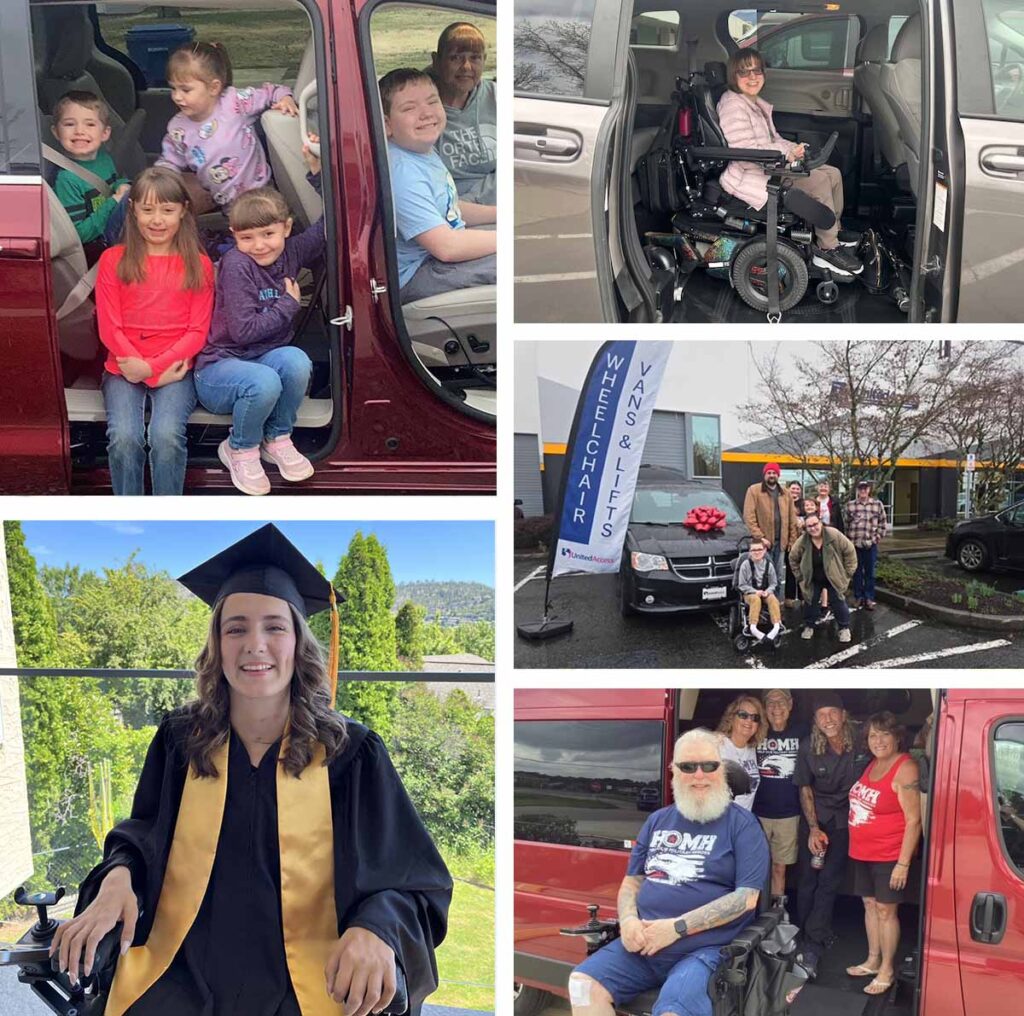
As a result, the family’s final out-of-pocket expense was minimal, demonstrating how collaborative WAV funding can transform lives. See more grantee success stories.
Measuring Impact Beyond WAV Ownership
Bridge to Mobility measures impact not only by vehicle delivery but also by improved quality-of-life outcomes for recipients. We see these impacts across many areas of life.
Improved Healthcare Access
Reliable, accessible transportation allows recipients to attend therapy sessions, medical appointments, and long-term treatment programs consistently. Improved appointment adherence often leads to better health outcomes and long-term cost savings.
Expanded Educational Opportunities
Accessible transportation enables students with disabilities to attend school consistently, participate in extracurricular activities, and pursue college or vocational training opportunities that would otherwise be inaccessible.
Employment and Financial Independence
Mobility access directly impacts employment opportunities. Many award recipients regain the ability to commute to work, launch businesses, or volunteer in their communities after receiving WAV funding.
Strengthened Family and Social Connections
Accessible transportation helps individuals maintain relationships with family members, attend social events, and remain active participants in their communities, reducing isolation and improving mental health.
The Future: Scaling Impact to Meet the Growing Need
The gap remains wide. There are 2.2 million people in wheelchairs needing accessible transport, and only 4% have access to a private WAV. Even with almost 20,000 WAVs becoming available each year, it is not enough to keep up. Bridge to Mobility is focused on aggressive scaling to better support this underserved population. As Gerhard shares, “My vision for the future is to do thousands of these to help thousands of people. It would be transformational for people in wheelchairs to be able to knock that 96% number down.” Plans to scale include increasing the number of partners and securing additional funding. As Bridge to Mobility continues to grow, the number of individuals we can support will only increase, accelerating accessibility for all.
Frequently Asked Questions
What is “last-dollar funding”?
Last-dollar funding is a model that closes the final funding gap in a wheelchair accessible vehicle purchase after all other financial resources have been exhausted.
Who qualifies for a Bridge to Mobility award?
Individuals with a demonstrated financial need who require a wheelchair accessible vehicle to improve their quality of life, employment, education, or medical outcomes.
How do partnerships help secure awards?
Partnerships allow us to leverage all available resources. As Gerhard notes, our collaborative model turns every $1 we give into nearly $5 of total impact by bringing in other charities and dealer participation.
How can I apply for an award?
The process typically begins with completing a contact form on our website or a referral from an NMEDA mobility dealer.
About Bridge to Mobility’s Impact and Efficiency
Bridge to Mobility is committed not only to increasing access to wheelchair-accessible vehicle funding but also to doing so with exceptional financial stewardship. After their most recent financial audit, BTM achieved an 89% program efficiency ratio, which means that for every dollar you donate, 89 cents goes directly to supporting individuals and families in need.